Choose your download
Pick the version that matches your macOS.
Bartender 5 (macOS 14 Sonoma+) • Bartender 6 (macOS 26 Tahoe)

Bartender 5
Stable for Sequoia/Sonoma

Bartender 6
For macOS 26 Tahoe
Bartender is an award-winning app for macOS that for more than 10 years has superpowered your menu bar, giving you total control over your menu bar items, what's displayed, and when, with menu bar items only showing when you need them.
Bartender improves your workflow with quick reveal, search, custom hotkeys and triggers, and lots more.




Bartender 6 has been redesigned from the ground up to fully support macOS Tahoe and Liquid Glass. We've overhauled everything, so the entire Bartender experience should feel much smoother, faster, and more responsive whenever you interact with your menu bar.

Lightning-fast access to your menu bar items is now even better. Get instant access to your hidden menu bar items simply by swiping or scrolling in the menu bar, clicking on the menu bar, or if you prefer, simply hovering.

Access the menu bar items otherwise hidden by the notch on MacBook Air and Pro screens. Bartender will automatically hide your currently shown menu bar items when needed to create room to show the items hidden by the MacBook Air and Pro screens notch, giving you access to all your menu bar items.
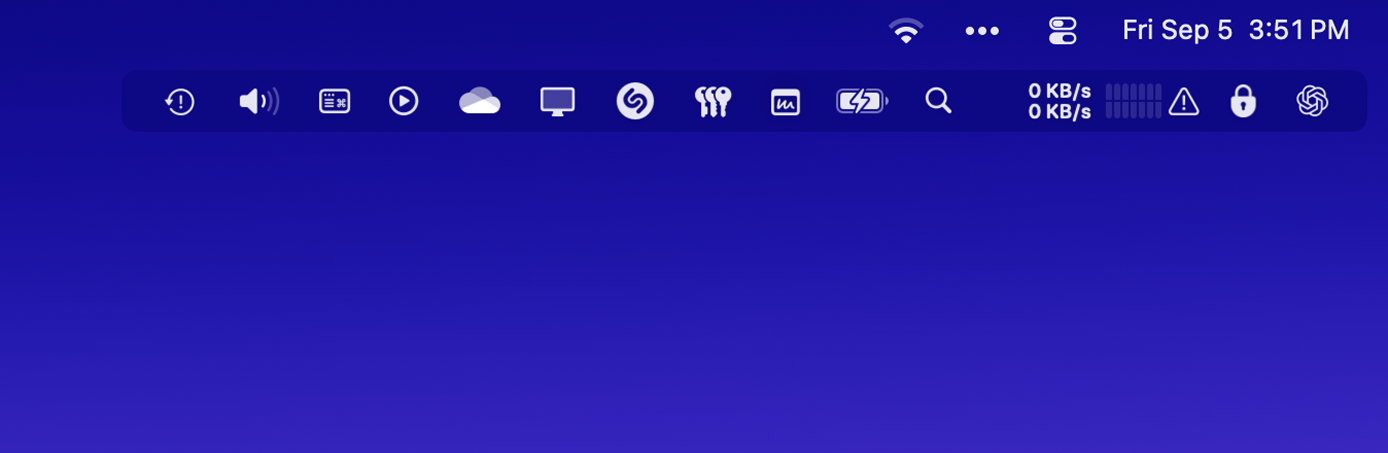
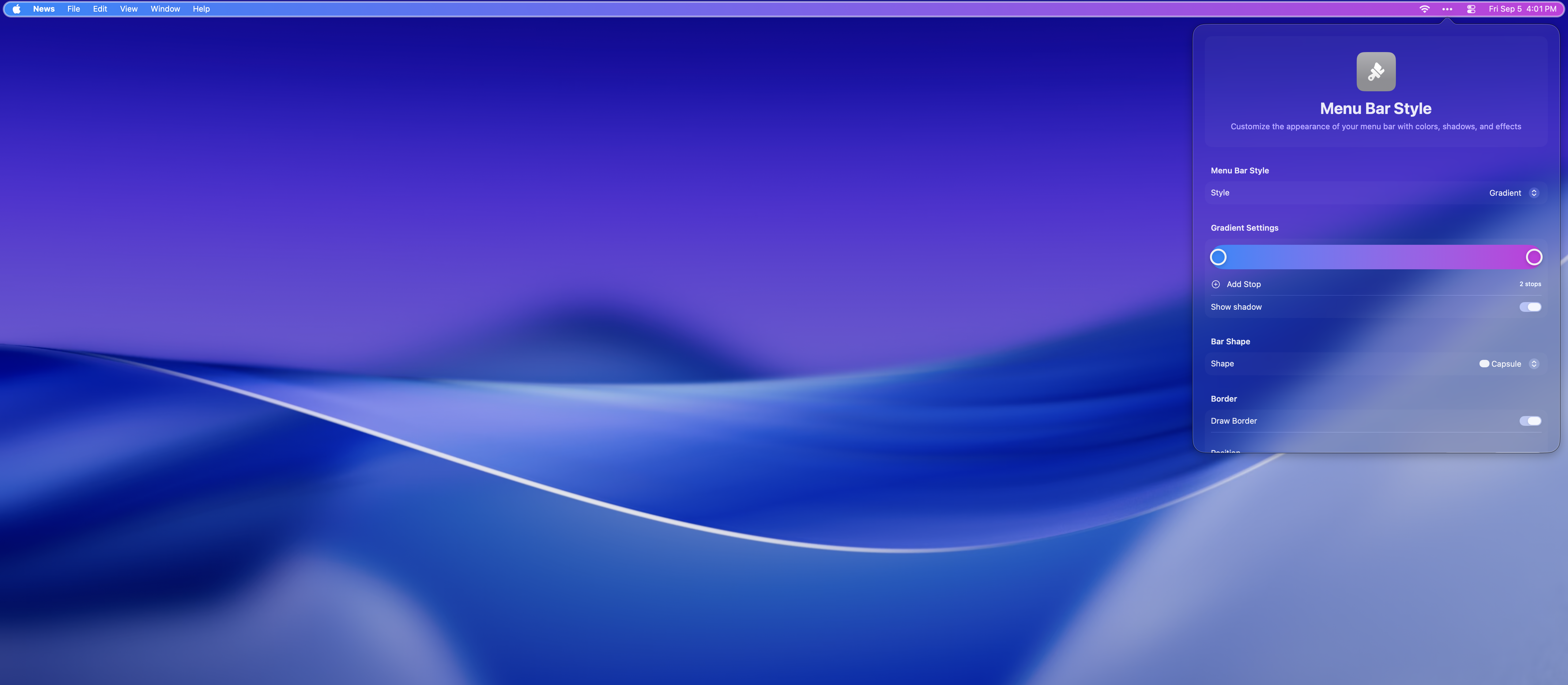

Make your menu bar your own, with menu bar styling you can:

Combine multiple menu bar items into one customisable menu bar item, and have quick access to all the menu bar items within.
For example group all your cloud drive apps together like Dropbox, OneDrive, Google Drive.
Have a group for connection related items such as Wi-Fi and VPN.
And another for media related items, like volume, media controls, airplay.
This can be a great way to have access to all your menu bar items on a MacBook Pro or Air with limited menu bar space due to the screen notch.
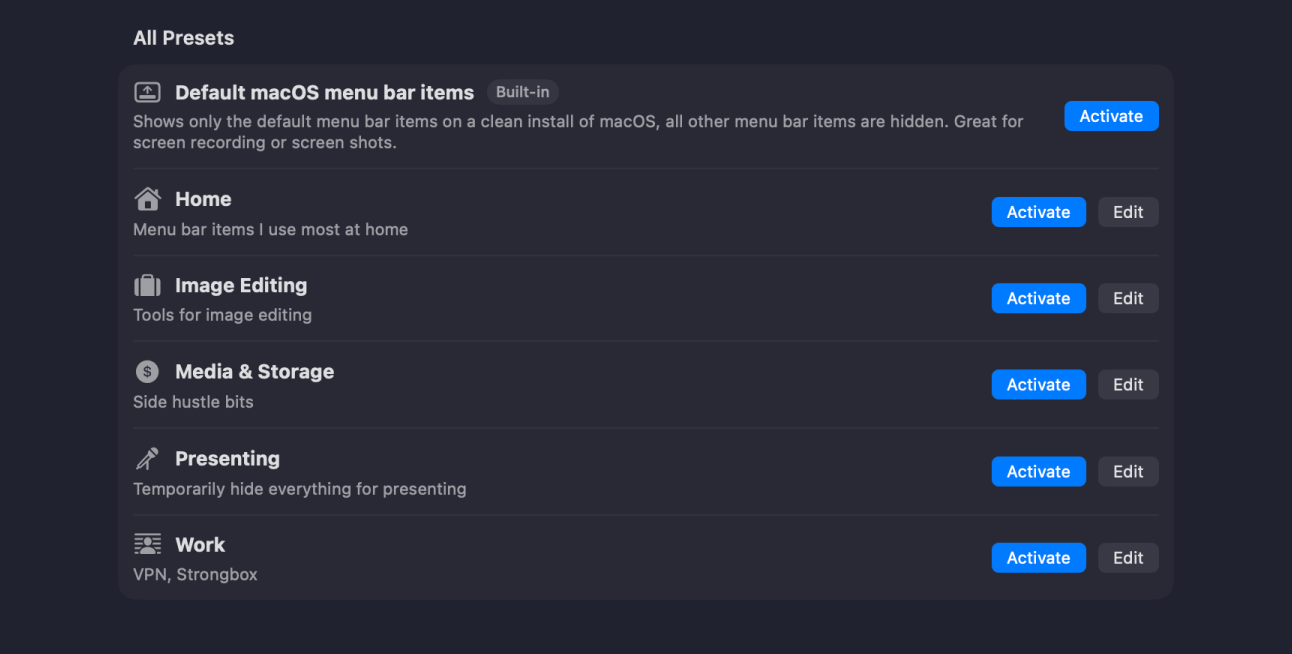
Create as many presets as you want and always have the right menu bar items available for your current workflow.
Show the macOS default menu bar items when recording your screen or screen sharing
Show work specific menu bar items in work hours, then social media items when at home... the possibilities are endless.
Presets can be automatically applied via triggers and also by macOS Focus modes.
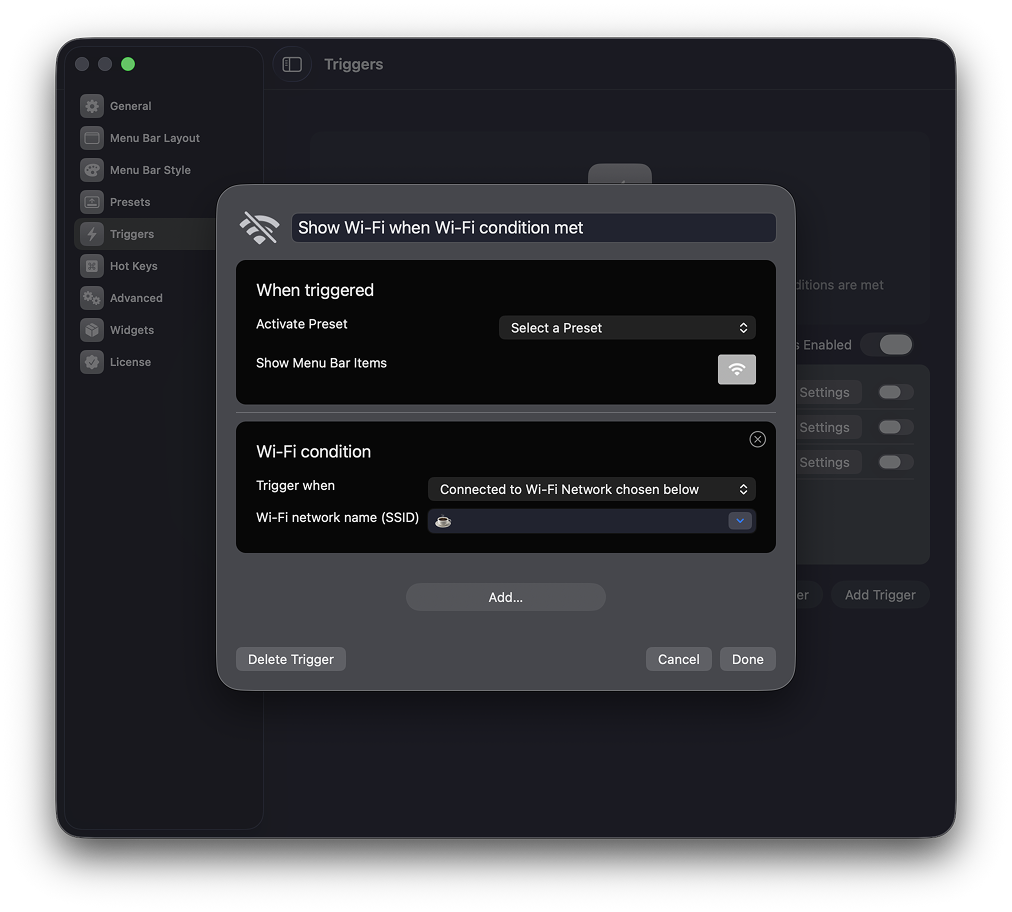
With a completely new Trigger system
you can apply a preset automatically, or show a set of menu bar items whenever your trigger conditions are met. Triggers conditions currently include
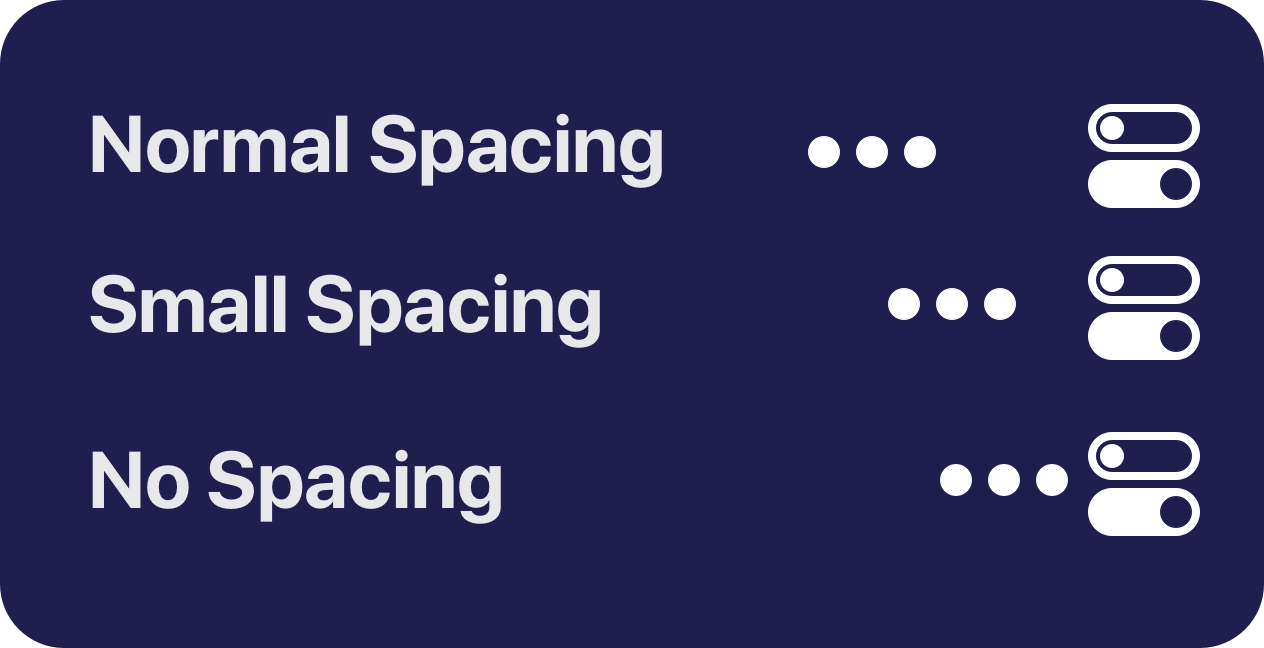
Reduce the space between menu bar items using Bartender, allowing you to have more menu items onscreen before reaching the macbook notch. Or just purely for style.
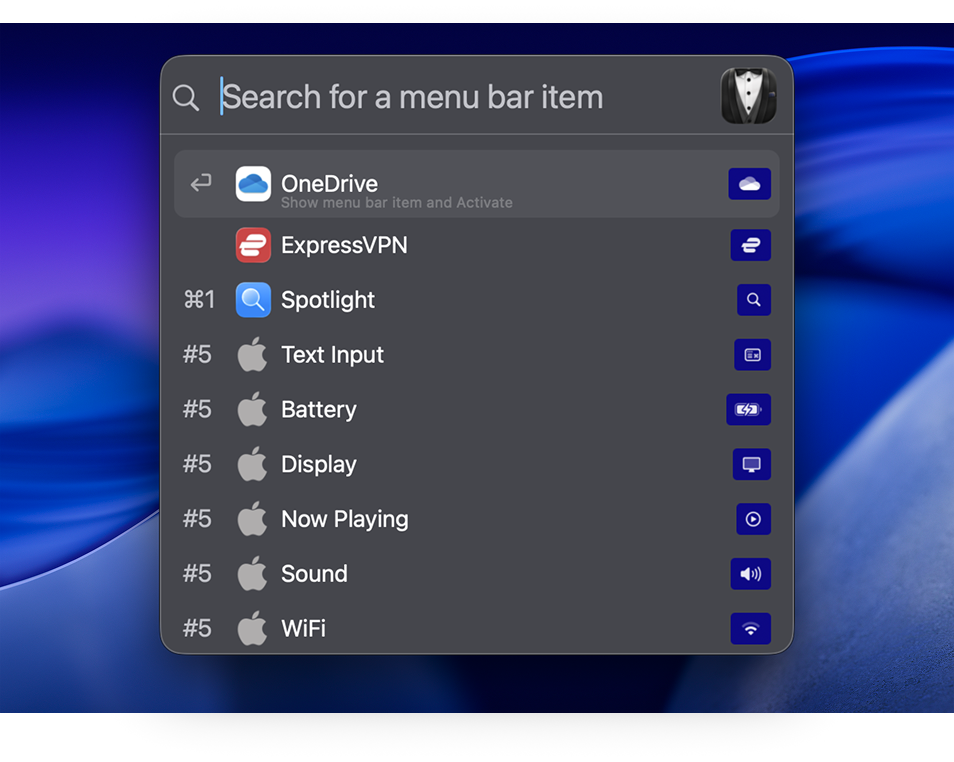
Quick Search will change the way you use your menu bar apps.
Instantly find, show, and activate menu bar items, all from your keyboard.
* the macOS screen capture menu bar item can show when using this. more info
Bartender 6 is designed for all the great changes in macOS Tahoe.
Bartender 6 runs native and lightning-fast on Apple Silicon and Intel macs.
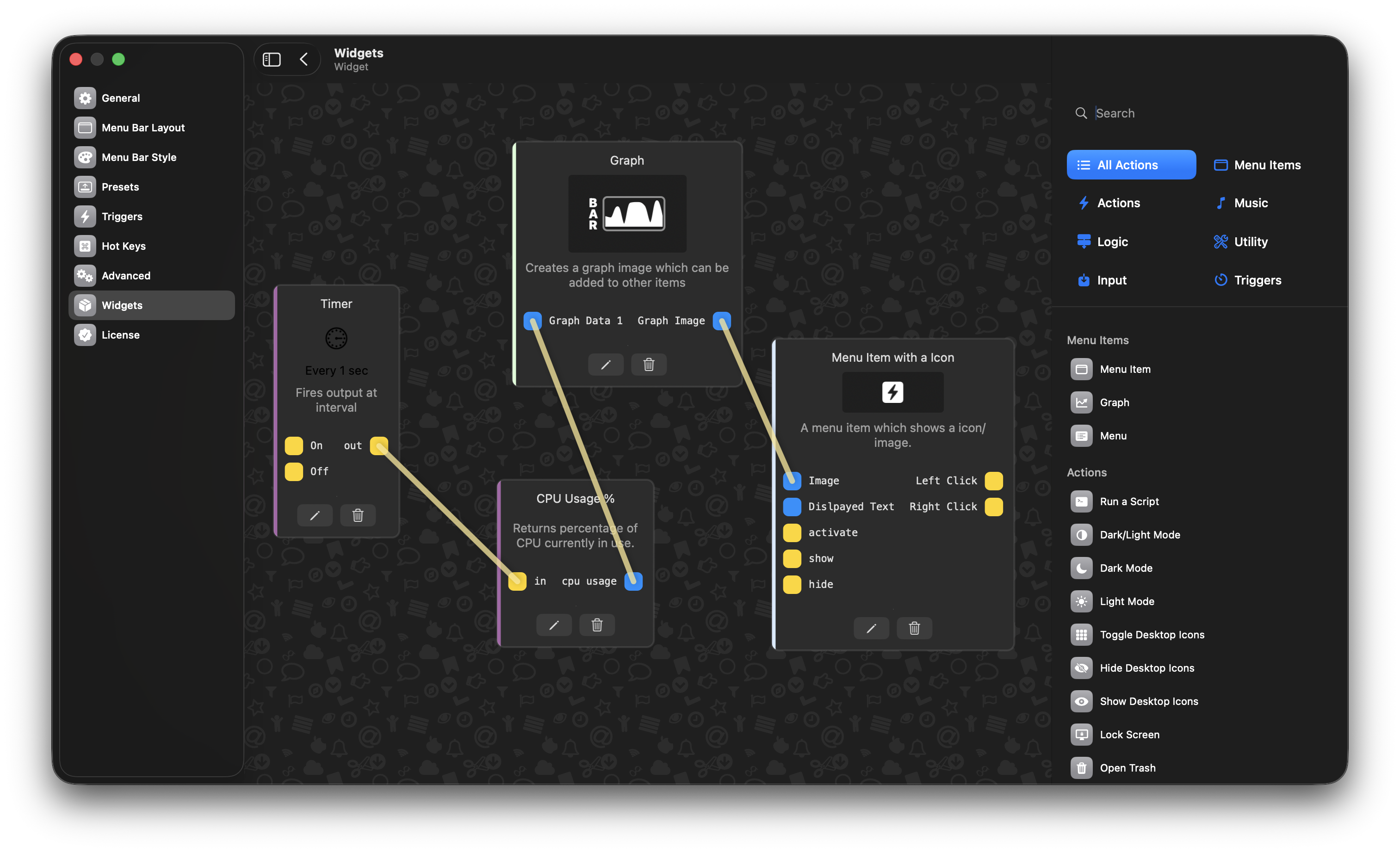
Create your own menu bar items
With Bartender widgets you can create your very own custom menu bar items, that trigger pretty much any action you want, no coding required.
Add hotkeys for any menu bar item; this can show and activate any menu bar item via any hotkey you assign.
With Spacers, your menu bar is uniquely your own, with the ability to customize menu item grouping and display labels or emojis to personalize your menu bar.
Use Apple Script to show and activate menu bar items. Fantastic for some advanced workflows.
Swap shown items for your hidden ones to take up less menu bar space, allowing you to have more menu bar items on a smaller screen.
You can choose where new menu items will appear in your menu bar, shown for instant access, or hidden for less distraction.
Step-by-step derivation of Maxwell’s Equations and electromagnetic waves. 5. Optics and Modern Physics
In the vast ocean of introductory physics textbooks, few names command as much quiet respect as . While giants like Halliday, Resnick, and Krane (HRK) or Young and Freedman dominate the American market, Benson’s University Physics has long been the silent workhorse of rigorous physics departments worldwide—particularly in India, Canada, and Europe.
University Physics by Harris Benson (1991-03-01) - Amazon.com
is a comprehensive, calculus-based introductory textbook designed for undergraduate students majoring in physics, engineering, or related physical sciences. Originally published by John Wiley & Sons , this highly structured text is celebrated for its clarity, precision, and pedagogical efficiency. It balances traditional physics topics with modern applications, making it an enduring staple for competitive exam preparation and university coursework globally. Core Structure and Volumetric Breakdown harris benson university physics third revised edition
tackling a rigorous, calculus-heavy curriculum.
Widely considered one of the strongest sections of the book, Benson clarifies highly abstract fields.
Most professors will tell you: You do not buy Benson to read it; you buy it for the . The Third Revised Edition contains over 2,000 problems. They are famous (or infamous) for three reasons: While giants like Halliday, Resnick, and Krane (HRK)
The foundational section establishes the bedrock of physical intuition.
: The textbook appends roughly 550 un-keyed exercises at the end of the chapters. These are deliberately not tied to specific sub-sections to mimic exam environments and challenge a student's problem-identification skills.
These are embedded every 2–3 pages. If you cannot answer a checkpoint, you have missed a concept. Re-read that section. readers can find:
: Refined over successive printings, the text provides a streamlined, mathematically verified layout with deep structural clarity on sign conventions and vector cross-products. Core Structural and Content Breakdown
The "Revised" tag indicates significant polishing. In this version, readers can find: