Inurl Indexframe Shtml Axis Video Serveradds 1 — [portable] Full
Easily manage and swap NVIDIA DLSS versions for optimal gaming performance
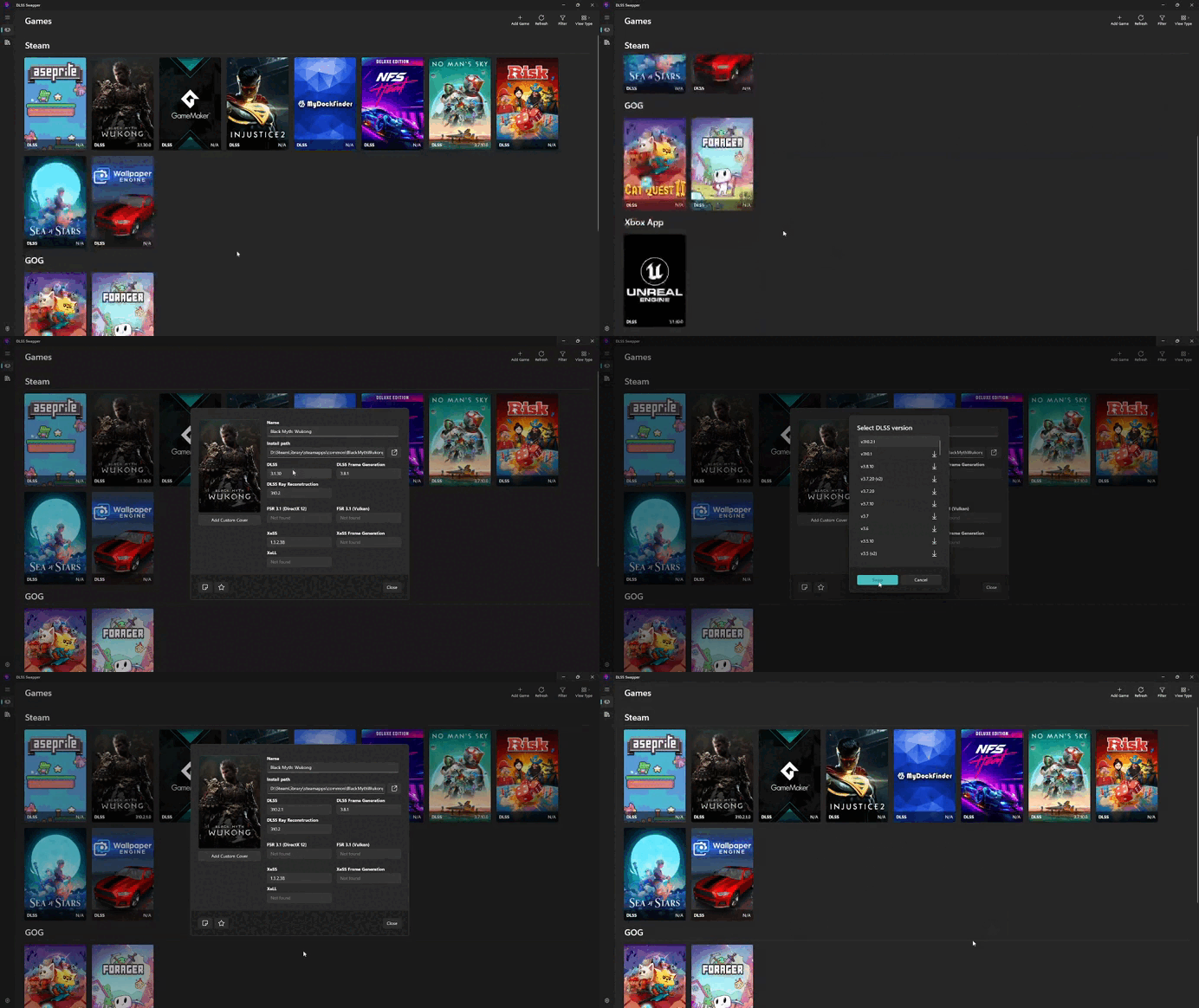
Easily manage and swap NVIDIA DLSS versions for optimal gaming performance
DLSS Swapper is an open-source tool designed to allow users to easily swap between different versions of NVIDIA's Deep Learning Super Sampling (DLSS) technology in games. This tool enables gamers to optimize their gaming experience by upgrading or downgrading the DLSS version used in a game, which can improve performance, image quality, or compatibility.
What sets DLSS Swapper apart is its comprehensive support for multiple upscaling technologies. Beyond NVIDIA DLSS, it also supports AMD FSR 3.1 and Intel XeSS upscaling libraries, making it a versatile tool for managing various upscaling technologies in games.
Switch between different DLSS versions to achieve the best balance of performance and visual fidelity
Automatically detects installed DLSS version in games, no manual file searching needed
Automatic backup system ensures your game files are always protected
Swap DLSS versions with a single click, making experimentation easy
Compare and test different DLSS versions in real-time for optimal performance
Clean and intuitive interface accessible to both beginners and advanced users
Go to DLSS-Swapper.Com and download the latest version. Choose between an installer or portable version.
Run the installer for a full installation, or extract the portable version to any folder of your choice.
Launch the application and it will automatically detect your installed DLSS-enabled games.
Select a game, choose your preferred DLSS version, and click to apply the changes.
Never expose a camera directly to the internet via port forwarding. Instead, use a secure Virtual Private Network (VPN) or an encrypted reverse proxy to access your video feeds remotely.
: An exposed video server can serve as an initial foothold into a private network. Once an attacker gains control of the camera, they can pivot to scan and attack other connected assets, such as databases or workstations. Remediation: How to Secure Axis Video Servers
: Compromised IoT devices are often drafted into botnets for DDoS attacks.
Before the widespread adoption of modern IP cameras, many surveillance systems relied on analog cameras. Video servers (or encoders) were used to bridge the gap. These devices take the analog signal from a traditional CCTV camera and convert it into a digital stream that can be transmitted over a local network or the internet. 2. Embedded Web Servers inurl indexframe shtml axis video serveradds 1 full
You can perform a simple check (from your own network or with authorization):
: Vulnerable cameras can serve as an entry point for attackers to gain a foothold on the internal network.
Place security cameras and video servers on a dedicated Virtual Local Area Network (VLAN) separate from your primary business or home data networks. Never expose a camera directly to the internet
: This instructs the search engine to look for URLs containing the specific file name indexframe.shtml . This file is a standard page template used by older Axis communications devices to host the live viewing interface.
As he dug deeper, Jameson discovered that the query was related to an old Axis video server, a type of surveillance system used in high-security applications. The "inurl" part of the query hinted at a specific URL or web address, possibly leading to a hidden or password-protected page.
If you have an active running on your network? Once an attacker gains control of the camera,
Older firmware platforms, particularly those relying on outdated .shtml configurations, are susceptible to older high-severity exploits. For instance, ancient bugs like allowed unauthenticated arbitrary command execution via raw web requests like virtualinput.cgi on legacy Axis web applications. 3. Lateral Network Movement
Axis video servers were primarily designed to bridge the gap between analog and digital surveillance systems.
When combined, these operators filter out standard websites and leave behind a list of live IP cameras and video encoders. Why Axis Devices Become Exposed
: Newer versions of AXIS OS include "brute-force delay protection" and security patches for known vulnerabilities.